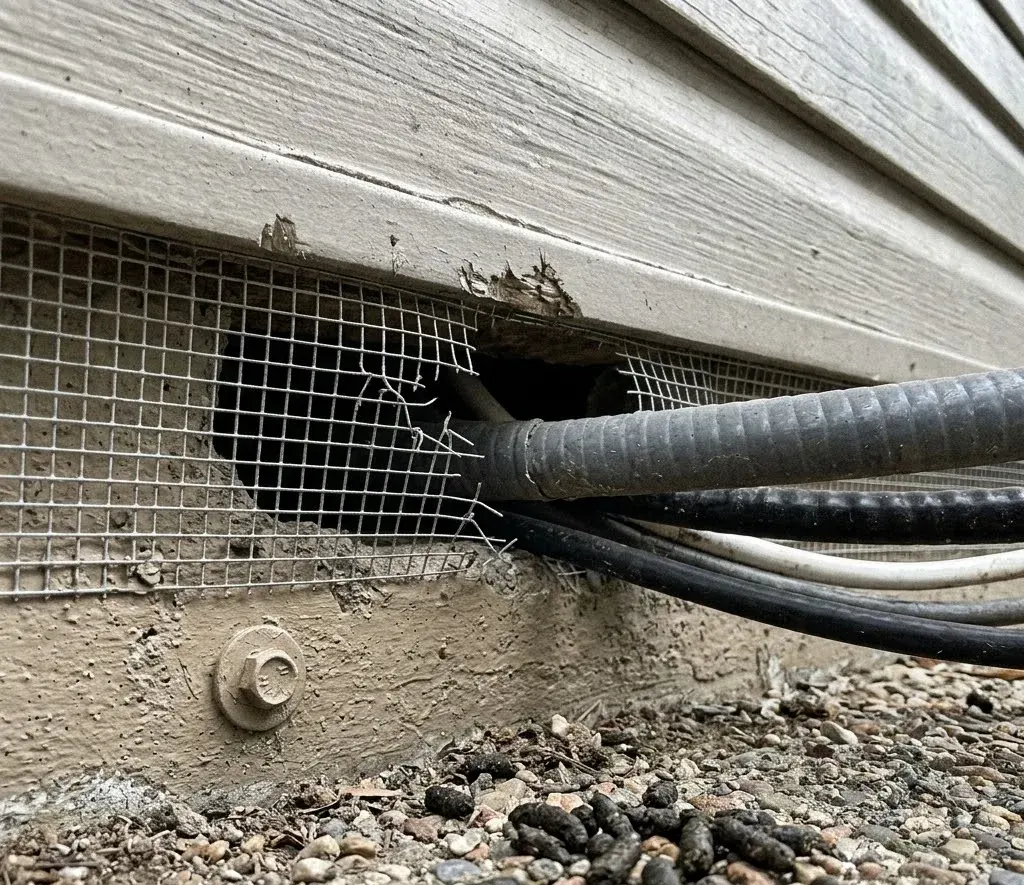
Using Copper Mesh for Rodent Gaps in Lee's Summit
Copper mesh can occupy small uneven gaps, but safe handling, surrounding materials, and the final surface affect its use.
Copper mesh is packed into small, uneven rodent gaps where the edges can hold it securely. It fills space but does not make a finished surface. Check the opening, moisture, and nearby materials; use a cover or another repair if the gap needs support.
Where Copper Mesh Can Fit
Copper mesh is a woven metal material used as a packed insert in a small rodent gap. Its strands can be pressed into an opening with an uneven outline, where a flat patch may leave space at the edges. In Lee's Summit, the useful question is whether the gap can hold the mesh firmly without leaving a route around it. The material takes up space; it does not spread over the surrounding surface or make a finished, smooth seal.
A compact insert can follow a rough edge more closely than a rigid piece cut to a straight line. That makes copper mesh a possible rodent gap filler for a small opening with enough depth to hold it. A flexible insert can adapt to an irregular outline, but the surrounding surface affects how securely it can be held. Mesh that sits loosely or leaves exposed space at the perimeter has not closed the route.
Copper mesh for mice is a gap material, not a coating or a stand-alone cover. You press it into the opening; the strands occupy the void, but the weave remains open. Around Lee's Summit, a resident near Downtown Lee's Summit or Grounds Park should judge the actual gap, not the place name. If the opening needs a continuous face, mesh alone leaves that need unmet.
Handling Mesh Without Exposure
The woven insert and the finished repair do separate jobs. Mesh can fill the interior of a narrow gap, while a compatible surface material or cover may be needed to close the face and keep the insert seated. In Lee's Summit, check what the surrounding surface can support before deciding how to finish it. A finish that will not hold, or that pulls away, can expose the gap again.
Moisture changes the material decision. If the spot stays damp or gets regular weather exposure, consider how water and adjacent materials may affect the repair over time. Copper touching other metals or finishes can create compatibility concerns, so identify what contacts the mesh before packing it in. A Lee's Summit address alone does not tell you whether a particular opening is dry, sheltered, or suitable.
Cut mesh can leave pointed strands that catch fingers or snag nearby finishes. Wear sturdy gloves, keep children and pets away while handling the material, and do not force it into a spot you cannot see or reach safely. In Lee's Summit, stop if fitting it requires disturbing material you cannot identify. If rodent droppings are present, avoid stirring up dust; ask a professional about safe handling.
When Mesh Needs a Finish
Before choosing mesh, look at the opening's width, depth, edge condition, and exposure. The insert needs enough room to seat without being loose, and the surrounding material must be sound enough to hold the repair. At a Lee's Summit property near Woods Chapel Park, as elsewhere, those checks apply to the specific gap, not the address. If you cannot inspect the edges safely, leave the opening alone and get help assessing it.
A rigid cover or a different repair may be more suitable when the opening needs a firm, uninterrupted face or added support. Woven filler can compress and occupy a void, but it cannot replace a weak surface or bridge a space that needs structure. In Lee's Summit, choose based on what the opening must withstand. Stop if the edge crumbles, the cover cannot be secured, or the repair would interfere with another building component.
When to Stop and Get Help
Copper mesh addresses a gap; it does not show whether rodents remain active inside. If you see fresh droppings, gnaw marks, or hear movement after a gap is filled, avoid disturbing the signs and have the activity assessed. In Lee's Summit, a home near Longview Lake needs the same distinction: an insert may reduce access at one opening, while signs elsewhere call for a broader inspection.
After fitting, look for mesh that has shifted, an exposed edge, or a finish that has separated. Any of these can leave the opening accessible or make the insert unsafe to touch. At a Lee's Summit home, check the repair without pulling at sharp strands. If it moves, stays wet, or the surrounding surface is failing, stop handling it and ask a professional which repair fits the conditions.
Safety and Fit Checks
- Check whether the opening is shallow, deep, or crumbling; a loose or failing edge may not keep an insert in place.
- Note persistent dampness and materials touching the copper before choosing a finish for the repair.
- Use a supported, continuous cover or another repair when woven filler cannot provide the face or strength the opening needs.
- Use copper mesh where a small, uneven gap needs a compressible filler and the material can stay tucked inside the opening.
- Check whether the mesh is only occupying space or whether the repair also needs a compatible outer seal to close the surface.
- Look for persistent dampness and contact with adjacent materials; either condition can make a different repair more suitable.
Service Details
Where can copper mesh help fill a rodent gap?
Copper mesh is used in a small, uneven opening that can hold a snug insert. Its strands fill part of the void, so it may help limit passage where the edges support it. It is not a continuous surface by itself. In Lee's Summit, inspect the opening's depth and condition first; if the insert cannot sit firmly or the face needs a solid cover, another repair may be needed.
Do I need a surface seal over copper mesh?
No. The weave leaves spaces between strands, so copper mesh does not create a smooth or weather-tight face on its own. Filling the cavity and closing the face are separate parts of the repair. In Lee's Summit, check whether that finish can attach to the surrounding material; if it cannot, the mesh may shift and the gap may remain accessible.
When should I stop and call a rodent professional?
Wear gloves when cutting or pressing copper mesh because loose strands can prick skin or catch nearby material. Keep children and pets clear of the work area. Check for damp conditions and contact with other metals or finishes before installation. If the opening is hard to reach, the surrounding surface is weak, or you find rodent waste that could be disturbed, stop and seek professional guidance in Lee's Summit.
Have the gap assessed safely
Show the pros we connect you with the gap’s size, location, and exposure so they can assess whether copper mesh suits the repair.
Call (816) 586-5803