What Rodent Clues Can Reveal About Movement
Lee's Summit spans different property settings, so a provider may need to account for yard access and household traffic when considering station placement. A visit near Downtown Lee's Summit or along U.S. Highway 169 still calls for a property-specific inspection; the place name alone says nothing about rodent activity.
Regional Kansas City winters bring cold nights, while summers are warm. Outdoor access can change with the weather, so a service plan around Longview Lake or Woods Chapel Park may need to account for reaching and checking a station. Those conditions do not establish whether rodents are present at a particular home.
For a home or business in Lee's Summit or another part of Jackson County, an inquiry is a way to ask about service at that location. Each provider draws its own boundaries; give the address and ask if that provider covers it.
Why Control Methods Can Differ
- ROLE
- The housing creates a defined point for bait placement; it does not block rodents from entering a building.
- BAIT MATCH
- Protecta branding and the model marking help identify the housing when several secured designs look alike.
- SITING
- The bait has its own label, which sets where and how that product may be used.
- OVERSIGHT
- Station location should account for observed activity, site access, and people or pets using the property.
- PRODUCT DIRECTIONS
- Whether your home is near Main Street or Longview Lake, ask which Protecta model and compatible bait are planned, then review that product’s directions for placement and precautions.
- PRODUCT LABELS
- Cold winter nights and warm summers in the Kansas City region can change outdoor access to a station. Ask how the provider will keep planned locations reachable and include them in follow-up checks as conditions shift.
- SERVICE PLAN
- an estimated $40–$50
Marks May Have Different Sources
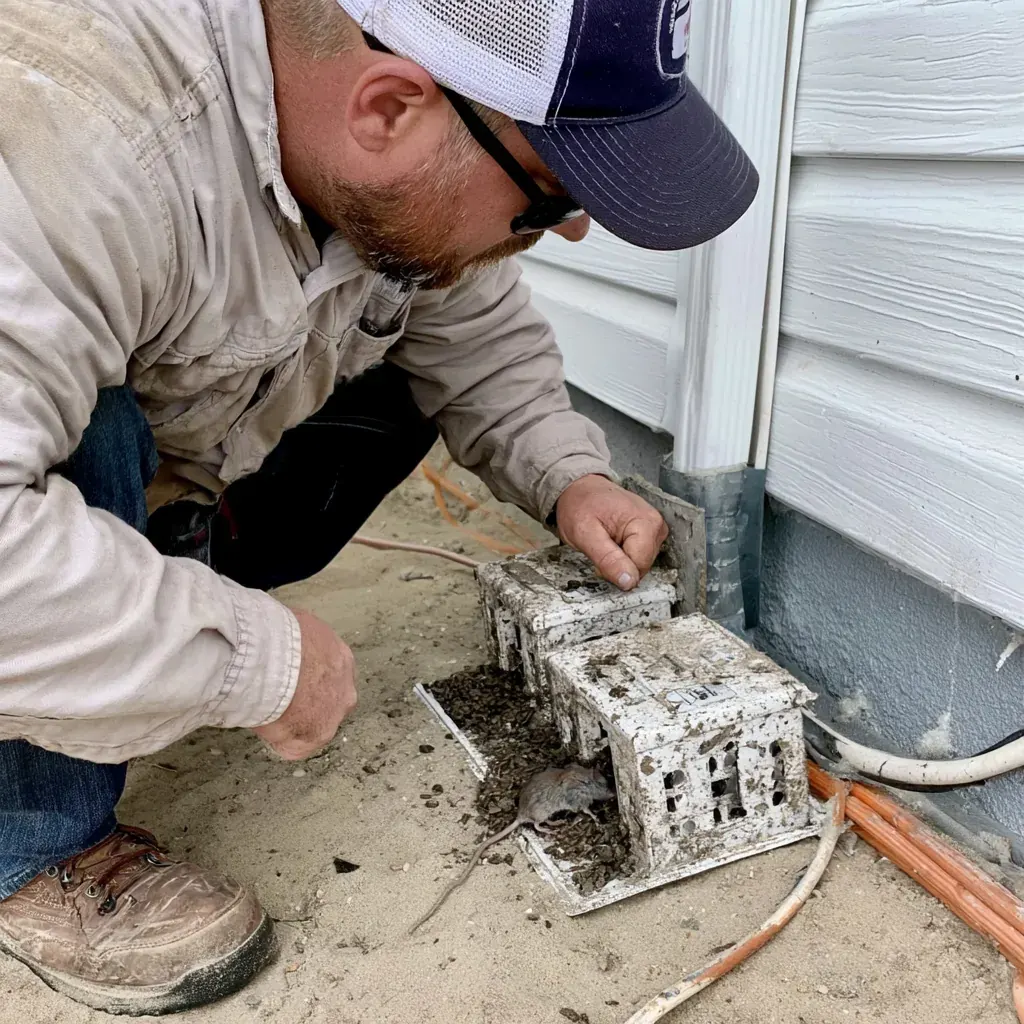
A station’s purpose is to hold bait for a rodent treatment. The brand and model markings identify the product; the general shape does not. Check the branding and model identification printed or molded into the housing, then compare it with the station’s product information. Ask the provider to identify the bait separately. Those details are more useful than judging by color or shape alone.
Reading Changes Between Service Visits
The pros we connect you with begin by checking for droppings, gnawing, nesting material, and possible openings around the structure. They use those findings to map likely activity and access routes before deciding whether a Protecta station fits. If selected, the model and compatible bait are chosen for the site and product directions.
After placement, the provider can record each station’s position and explain how it will be checked. Follow-up looks at signs of activity and whether a device needs attention or the plan needs adjustment. Lee's Summit properties differ in layout and access, so the service schedule and next steps depend on the findings.
If the initial inspection finds no continuing signs and gives you clear prevention steps, you may be able to stop after that visit. Continued coverage is easier to justify when new evidence appears later or device checks are part of the service plan; ask what would prompt another visit.
WHAT ONE APPOINTMENT COVERS BESIDE LATER CHECKS
| Inspection Scope |
Select Control Methods |
|---|
| Activity confined to one part of the property | Control plan scope |
| Droppings return along familiar travel paths | Cleanup guidance |
| Rodent evidence near multiple gaps into the building | Openings addressed; stations reviewed |
SERVICE SCOPEKeep a copy of the service record with the product information for later reference. Ask the provider to identify the station model and bait product on the service record, and to explain the placement and precautions that apply. The bait label governs its use; the station’s directions address the housing.
Nest Material in Sheltered Spaces
Rodents can gnaw food packaging, stored materials, and parts of a building as they move through it. Gnaw marks can show where rodents have reached stored goods or building materials. Cleanup may be needed where droppings or urine are present, and damaged materials may need repair or replacement.
Move Firewood Away From Entryways
From a distance, note the station’s position and whether the housing appears closed and intact. Read any visible identification without touching it, and keep children and pets away. If it is open, broken, or displaced, contact the provider. Leave bait inside the unit and placement adjustments to the service professional.
Limiting Household Access to Bait
Treat a station with a loose lid, break, or exposed contents as a possible contact hazard. A loose or broken cover can leave bait less protected from contact. When you receive the service instructions, check that they explain where stations are located and how to report a damaged unit. Bait exposure can be harmful if the product is misused.
Get a Clearer Picture of Rodent Fees
Point out where you have seen signs, such as near a foundation or in storage areas, and ask how those observations inform the estimate.A guide range can orient your budget for inspection and control tasks identified from the findings, while repairs and later visits enter the total only by agreement. In Lee's Summit, describe what you have seen near Grounds Park or Rotary Park to the pros we connect you with; confirm the visit charge and precise work directly before booking.Open pricing guide for rodent control pricing ranges, with factors that can change an estimate.